Showing posts with label GM Dharma. Show all posts

Friday, January 4, 2008

Vegetarian

Written by Living Buddha Lian-sheng, Sheng-yen Lu


Someone once asked the Dalai Lama: In Tantric Buddhism, are practitioners required to be vegetarian??

The Dalai Lama replied: Personally I am a vegetarian, but the lamas are not.
If one is not a vegetarian, then one kills; isn’t that a violation of the precepts?
The Dalai Lama ambiguously replied, Even if one eats meat, one does not necessarily kill. Being a vegetarian is not necessarily relevant to killing. With an awkward smile, he added: The lamas do not kill, yet they are not vegetarians?


When I was dining with Ganbu, a senior monk at the Drepung monastery, we were served only meat.

To my knowledge, vegetarianism is a product of Chinese Buddhism. It was originally created by Xiao Yan, the Emperor Wudi of the Liang dynasty for Buddhist practitioners. The idea was to cultivate compassion and alleviate the creation of negative karma.


There are benefits to vegetarianism, however it is not the primary requirement for Buddhahood; otherwise the cows, horses, and sheep would all have become Buddhas.

Many Buddhist novices are not adapted to being vegetarians. In this case, they may start by eating three kinds of clean meats, such as: not witnessing the slaughter, not hearing the slaughter, and not asking someone else to kill for them. This is a convenient way to enter into vegetarianism.

Do I require True Buddha Tantric practitioners to be vegetarian?

My answer is that it is voluntary.

Although this is the case, those who consume meat should first purify the food by blowing the air. By reciting the Manjusri Deliverance Mantra, this delivers the spirits of those to be consumed to a better realm. Since we are generating compassion towards them, we will not be creating any negative karma. Therefore eating meat is fine if this method is practiced.


In terms of vegetarianism, there is a difference between Sutric and Tantric Buddhism. In any case, please remember the following teaching of the Buddha:
A mouthful of pure water
Contains millions of living organisms.
If one does not recite mantra,
It is as if one kills.

Although it may seem insignificant, one cannot afford to neglect this principle.

True Practice

I remember one night when I was performing my duties for Taichung's South Gate Bridge Land Surveying Company, an invisible spiritual teacher descended and continued to teach me the Tantric Dharma over a period of three years, averaging an hour per night.

Back then, my arms and legs were often manipulated by the invisible spiritual master, and these experiences made me realize that Gods and spirits really exist in this universe; that there is such a thing as a "spiritual world", and the "invisible" does exist. I hence made a vow that this shall be my conviction in life and I would cultivate truthfully.

Once I was lazy and uttered, "Why should I practise the Dharma arts? In times of need, all it takes is the help of my invisible teacher to settle things for me."

I was reprimanded for making such a statement!
I have studied the Tantric teachings for many years, entering into retreat for three years at the Ling Xian (Spiritual Immortal) Villa in Seattle, USA. It has been thirty years since the Golden Mother of the Jade Pond initiated the opening of my spiritual eye. I feel that my only strong point is my persistence in cultivation, truthfully practising daily without fail.

My blood type is 'O', depicting a strong character with great patience. When faced with any assignment, I will complete it, no matter what. I am down-to-earth, and shun laziness. You can say I am silly and idiotic, but I am ver serious and committed to my cultivation.

I often say that writing and practice are the two important duties of my life, and they are activities I must perform daily. My writing improves over time, as does my spiritual unfolding through practice. No one can ever take that away from me!

Let me say this to you. I am a true Vajra Guru. On what basis do I say this? I say this on the basis that I truthfully practise the True Buddha Tantric Dharma daily, without fail.

There are many pseudo Master among us in today's society, and they all claim, "With a single empowerment, the three main channels shall circulate freely."
"With one single empowerment, the spiritual foetus shall be conceived."
"With one single empowerment, one shall live to be more than a hundred years old."
"With one single empowerment, the Dharma Wheel shall spin on its own, and one will not need to make any effort in cultivation."

How true are such claims? Please do not ask me. You may refer to the words of Padmasambhava, which state, "Honor the Guru, treasure the Dharma, and practise diligently."

Please remember this:
Practice with perseverance and patience. Never crave for magical approaches and never look for short cuts. Be practical and honest with your cultivation!

The Birthday of Buddhas and Bodhisattvas


Dharma talk on 15/02/91


One of my disciples wrote to me a few days ago, as his father wanted to ask me a touchy question. If I can answer to his satisfaction, he will take refuge in me , otherwise he would not have any confidence in me. The question is : "Why was the date seventeenth of November (Lunar calendar) chosen as Amitabha Buddha's birthday ?"

Various Buddhist Sutras told us that Amitabha Buddha was an Indian Prince who renounced the world and was later on ordained as Dharmakara (mind of the Law).(So was Sakyamuni Buddha) The name of Amitabha Buddha had been mentioned many times, in the Amitabha Sutra and Sukhavativyuha Sutra by Sakyamuni Buddha. Therefore, we can safely conclude that Amitabha Buddha must have lived long before Sakyamuni Buddha was born.

To-date, we still do not have any concrete evidence to prove that Sakyamuni Buddha was born two thousand five hundred years ago. In fact, it has been a contentious subject at this juncture, as Sakyamuni Buddha's birthday is celebrated on a different date by Buddhists in India, Sri Lanka, Thailand, Tibet, China and Japan.

In short, no one really knows for sure when Sakyamuni Buddha was born.

If we can't even tell the birthday of Sakyamuni Buddha, who was born after Amitabha Buddha, how can we know the birthday of Amitabha Buddha for sure ?

However, there is a record on how Amitabha Buddha's birthday was chosen. A Zen master by the name of Yong Ming Shou (meaning forever bright and long life) in China was acknowledged by many Buddhists to be the reincarnation body of Amitabha Buddha. As Chinese Buddhists believe them to be the same person, Master Yong Ming Shou's birthday is taken as that of Amitabha Buddha.

As you know, there are eighteen Padmakumara (Lotus Lads) residing in the heaven realm. The date, May the eighteenth, has been chosen as the birthday of Padmakumara, since this was the day Padmakumara was born into this Samsara world.

Master Padmasambhava is said to be born out of lotus flower at the Guo Xiao sea. And July the tenth is considered to be his birthday. In other words, a child just appeared on the lotus flower, and the day his father, the king carried him back to the palace was deemed to be his birthday. The birthday can never be accurate, as we do not know how long he had stayed put on the lotus flower. It could have been three days, four days, or even ten days before he was found.

In conclusion, they are quite a lot of records on the birthdays of many Buddhas and Bodhisattvas, although the records might not be accurate. It is not necessary to care too much about the accuracy of them - just take the days they came to this world as
their birthdays.

The Antidotes Against Ignorance


Dharma Talk on 13/10/1993
(page 79-80 Achievement of Rainbow Light Body Volume Seven)


I talked about "greed" and "hatred" the last two days. Today, I am going to touch on the antidotes against "ignorance". Some of us are born with poor memory, others are very weak in comprehension, therefore our ignorance can be considered in-born. What are the antidotes ? Two words can explain it all - "extra effort". A smart person may use only five minutes to memorize it, while a not so intelligent person may have to spend as long as fifty minutes to do the same. To understand a complicated issue, a clever person may use one hour, while a stupid person may spend up to ten hours. As the Chinese saying goes : "Hardworking can compensate for our clumsiness, " Only diligence can help us overcome our stupidity.

"Extra effort" is also prescribed by both the Hinayana and Mahayana School of Buddhism, to compensate our in-born shortcomings. Unless and until we put in diligent effort, it is very difficult, if not impossible, for us to become intelligent overnight. Some of us just do not have the knack to reason, let alone draw inferences about other cases from one instance. "Akasagarbha Bodhisattva's wisdom " is a dharma used by Tantric cultivators to improve their memory and intelligence. This dharma originated from Kong-Hai, the eminent Japanese monk who taught it immediately after his spiritual response. I have included it in my book entitled "The dharmas from Tantrayana."

As far as I know , our intelligence quotient is determined by the eight characters of our birth.(bazi - in four pairs - indicating the year, month, day and hour of a person's birth, each pair consisting of one Heavenly stem and one earthly branch) which determined the strength of light we should receive from the sun , moon, star and planet earth. The strength of these different kinds of light in turn decides our intelligence.

A cultivator bent on improving his wisdom in terms of memory and comprehension powers must put in extra effort in his spiritual cultivation. Otherwise, his understanding will never be improved.

In fact, unless and until we are very hardworking, we can never change our level of intelligence. With a mediocre intelligence, we may not be enlightened at all. That is why one of the six perfections (paramita) proclaims that we cultivators must work diligently in order to remedy our shortcomings.

Om Mani Padme Hum

Tthe Antidotes Against Hatred

Dharma Talk on 12/10/93
(Page 77 - 78 Achievement of Rainbow Light Body Volume seven)


Yesterday I talked about the antidotes against greed, today I am going to talk about the antidotes against hatred. In fact, the five poisons of greed, hatred, ignorance, doubt and pride are traits of all human beings. If we are able to purify our bodies , speeches and minds, and transform them into the five wisdoms of Buddha , our Buddha-natures will emerge.

We have to rely on the transformation process to change our ordinary human nature to Buddha nature. By cultivating the four immeasurables, and really putting them into practice, we will be able to reach a stage of "no ego" , "no self", and eradicating any hatred. Once we have mastered the four immeasurables , we will not harbor any hatred , as we know we must discard all the worldly issues.

The Hinayana school of Buddhism advocates the cultivation of "selflessness", so as to get rid of our anxiety. Hatred does not arise if there are no human beings around in the first instance. And we will not demand others to apologize to us . The concepts of "no human race" and "no self" can be used to transcend our hatreds .

Many dharma protectors from the Tantrayana School of Buddhism look fierce with their eyes-- full of hatred. Before assuming their roles, such dharma protectors as Yamantaka, Acala and Hui Ji (filthy looking ) Vajrasattva contemplated on "hatred". Why ? By so doing, they can use their ferocious look to protect the dharma; by embodying hatred and emptiness, they are known as the wrathful Vajra. Their rages and indignation stem from their benevolence to salvage all sentient beings. They are dharma protectors with the embodiment of hatred, benevolence and emptiness.

The anger of common people is degrading because he has something that is at stake. Such anger can only at best be called common anger. On the other hand, the anger of dharma protectors is altruistic, showing mercy to liberate all other sentient beings. The anger is a manifestation of the embodiment of hatred, benevolence and emptiness. The wrathful look is different from that of the ordinary people. In short, people get angry because they lost something, while dharma protectors do so because they want to liberate others and to protect the dharma.

The wrathful varja gods enshrined by Tantric cultivators are really frightening. Their anger is above that of us, human beings .

Om Mani Padme Hum

The Antidotes Against Greed


Dharma Talk on 11/10/93
(page 75-76 Achievement of Rainbow Light Body Volume Seven)


Last night a disciple told me : "Although I know everything will come to pass eventually, I just could not control my greed !"

Having learned the concept of "impermanence" from Buddhadharma, we are still very greedy about money . The more we have, the more we want. When are we going to be fully satisfied ? The answer is "never". When the desire can never be satisfied, we call it "greediness". What can we do about it ?

Our greed is not limited to money alone. Among others, we crave for social status, material gain, and sex . Can we find any antidote against greed from the Buddhadharma ? The Hinayana school of Buddhism advocates meditation on the uncleanliness of human body of oneself and others , as all things in existence are impure and subject to decay. When the greed is on sex, we could meditate our love ones decomposing gradually into skeletons.

In the Mahayana school of Buddhism, the antidote is known as "the meditation on impartiality ". We must be compassionate towards all other sentient beings, by treating them as our equals. We should not have discriminative minds. To stop our greed, we must make vows to be altruistic. We must be very compassionate before we can reach the stage of "no ego".

Among the five poisons namely greed, hatred, ignorance, doubt and pride, greed is considered by the Vajrayana school of Buddhism as the most severe hindrance. To stem our greed, we must meditate on transforming greed into emptiness - just like the process of cleaning up a filthy place into a spotless one. Only the Vajayana School of Buddhism uses this purification method. Greed is thus viewed as the equivalence of emptiness.

In conclusion, in order to get rid of our greed, followers of Theravada School of Buddhism will meditate on impurity and skeletons , believers of the Mahayana school of Buddhism will make Bodhi vows to be altruistic and treat all sentient beings equal; and cultivators of Vajayana school of Buddhism will transform greed into emptiness.

The above-mentioned are nothing but theories. To stop our insatiable greed, we must put what we have learned into practice. I hope all of you do have a better understanding on the antidote against greed now.

Om Mani Padme Hum

The Antidotes Against Pride


Dharma talk on 15/10/93
(page 84-86 Achievement of Rainbow Light Body Volume seven)


Today I am going to talk about "pride", that is, self-conceit, or looking down on others.

Generally speaking, human beings have the common traits of greed, hatred, ignorance, doubt and pride. And the Hinayana School of Buddhism has prescribed that the "impartial mind" be used as the antidote. By treating all human beings as equal, we will never be arrogant. The word "no" is stressed in the Buddhist saying: "No ego, no human and no sentient being." The act of a Bodhisattva is for the good of others; he does not show his pride. Hence the Mahayana School of Buddhism lays stress on altruism.

If we are compassionate towards those less fortunate, less capable, and less intelligent human beings, we will not be arrogant and look down on them.

In short, compassion, altruism and impartiality are used by Mahayana and Hinayana, respectively, to deal with personal pride.

The Tantrayana school uses a slightly different approach. It proclaims that human pride can be transformed into a Buddha dignity. What is Buddha dignity ? It is the unrivaled pride of a Buddha. The difference between these two types of pride is very subtle.

In order to succor others, an enlightened cultivator will make great vows like all the other Buddhas . In so doing he will exude dignity like that of a Buddha when he succors sentient beings compassionately and fearlessly.

Sakyamuni Buddha was venerated and respected by many . He exuded the Buddha dignity we just talked about. By devoting his whole life, money and power towards dharma teaching, he liberated many sentient beings. He did not take pride in what he did , and thus earned the admiration of many . His pride disappeared when he gained enlightenment.

In conclusion , this is how pride is dealt with:
Hinayana stresses on impartiality.
Mahayana emphasizes on altruism.
And Tantrayana transforms pride to dignity .

As you know, all kinds of antidotes are prescribed by Buddhism to cure the five poisons of greed , hatred, ignorance, doubt and pride. It would be better still if we can transcend them.

Om Mani Padme Hum

The Antidotes Against Doubt


Dharma Talk on 14/10/93
(Page 81-83 Achievement of Rainbow Light Body Volume seven)


I talked about the transcendence of greed, hatred and ignorance in the last few days. Today I am going to talk about doubt. Doubt is a common ailment among human beings. Zen Buddhism does not dispel doubt, instead it encourages students to have doubt. It is said in Zen Buddhism : "Big doubt - big enlightenment, small doubt - small enlightenment, and no doubt - no enlightenment."

Even so, Zen Buddhism does not encourage its students to have doubts on Buddhadharma. Although doubt is the key to the truth, we should not have any doubt over the Buddhadharma taught by Sakyamuni Buddha, nor our guru.

Zen Koan (Case study) is noted for its questioning techniques to find out the ultimate truth. For instance, "Who is reciting the name of Buddha ?" We will soon reach the question : "I am the one reciting. But who am I really , and where did I come from ?" Through continuous qustioning, the ultimate truth will be found.

Previously Zen masters liked to ask this question : "Where is your heart ?" By looking for our heart, we will eventually find the truth. This is how Zen Buddhism is taught.

Another example. "Who is pulling the corpse ?" By asking questions, we will soon come to ask this question : "Why am I wandering around with my physical body ?" Because of doubt, we ask more questions, eventually we will develop an insight.

In the Tantrayana School of Buddhism, doubt is turned into indestructibility. There should not be any doubt left. As human beings, most of us are full of doubts, changing our minds every now and then . We lose our confidence after a bit of setback. Doubtfulness and indecisiveness are common traits of human beings.

Today we have faith; tomorrow we are doubtful. Day after tomorrow, we regain our confidence, just to change our mind a day later. This is a vicious cycle. We have all kinds of doubt about our teachers, Buddhadharma, the law of cause and effect, and the existence of karma .....

We are taught to fully understand Buddhdharma, so as to have a self mastery of our life in Tantrayana Buddhism. In my view, this is absolutely right. We must have absolute faith in Buddhadharma, and respect our guru who transmitted the lineage to us. If we do so, our penchant for doubt will be eradicated and we will have "Zheng Liang" (Spiritual achievement).

Zen Buddhism uses questions to find the truth. Whereas Tantrayana Buddhism eradicates our doubt by means of spiritual response. When our bodies emit qi (vital energy), our meridians are cleared of blockage, and we will see the brightness. If we are able to uplift our ming-dian (Bright-spot), we will be able to solidify it and soon we will know our spiritual achievement. Once we experience this dharma taste, our confidence will be enhanced.

Using the same logic, those who always have doubts can never have attain a high level of spiritual achievement.

Human beings doubt the law of karma and Buddhadharma. Only saints and Zen practitioners go one step further to analyze the issues, and eventually they become spiritually enlightened.

We must know how to discern the two kinds of doubt:
Commoner's doubt -- cause of itinerant behavior.
Saint's doubt -- the catalyst of truth seeking.

Om Mani Padme Hum

Slack from being too familiar

Dharma Talk on 26/12/90
(page 146-150 Achievement of Rainbow Light Body Volume two)


There are three pet phrases in Tantrayana to describe the mistakes we make in our daily cultivation.
The first is : "Mang Ze Diu" . When we are too busy, we have no time to cultivate and thus, we abandon the practice.

The second is : "Shou Ze Liu". There is a tendency to slack once we get too familiar with the practice.

The third is : "Si Ze Xiu"." When we are no longer alive, everything will come to a complete halt; therefore there is nothing to cultivate.

The second mistake is ironic. How is it that familiarity with the dharma and our practice will result in a slack ?

I believe there are three contributing factors :

1.. The practice is too easy . When we have to go through the same thing everyday, it will become nothing but a mundane chore !

2. There are too many psychic responses from the outset. Later, when the spiritual responses seem to have faded away, a slack will set in.

3. Familiarity breeds carelessness. We may not pay attention to the meaning of Sutra anymore .

This is how a normal cultivation is carried out. - we meditate for a while- some even fall asleep, once we come out of it, the ritual is over. As there is nothing new to learn from the practice, we may even nod our heads a few times as we try to enter into a Samadhi.

What do we offer ? Do Buddhas and Bodhisattvas come to accept our offering ? Do we use visualization to multiply our offering ? As we are too familiar with the ritual, we just form the Mudra and chant the Mantra. We do not bother with the answers anymore.

This is the meaning of "Shou Ze Liu" - A slack from being too familiar.

Let me give you another analogy - Playing the gramophone. First we put the record on, then we place the needle on top of the record. A beautiful melody will be played if the needle rests in the right tracks. Otherwise, the needle will glide to the end of the record, and we hear nothing. If the record is so glided time and again, soon it will be damaged. The same logic applies.

Patriarch Milerupa once said : "Slower cultivation will lead to a faster enlightenment !" What did he really mean ? He never encouraged us to be sloppy in our cultivation. He wanted us to slow down our pace and try to understand the profound and underlying meanings of our cultivation.

In short, our daily cultivation must reach a certain depth. When we recite the Sutra, every word that we utter must be imprinted in our mind. Our visualization must be meticulous and clear. We must enjoy the dharma taste in each and every session of our cultivation. Then our spiritual cultivation is considered a successful one.

Are we really engaged in visualization ? Do we inhale white and exhale black ? Or are we just taking a nap ?

Once we are too familiar with the ritual, we tend to be too careless, and that causes our downfall !

When we recite the Sutra, we must try to follow the timing of the woodenfish. We must ask ourselves these questions : "What is that I am reciting now ? Did I utter the words properly, listened to them carefully, and engraved them in my mind ?"

Take the example of the water repentance ritual. We can recite the ritual texts at a very fast pace. But do we really understand the meaning of the Sutra ? Are there Buddhas and Bodhisattvas who come to grace the occasion ? Do they radiate rays of light on us to remove our karmic hindrances ? Do we show any auspicious signs ?

Without these spiritual responses, our confessional ritual cannot be considered a successful one.

When the ritual proper is over, it just signals the beginning. We must show auspicious looks. The Buddha or Bodhisattva in attendance must radiate to eradicate our misfortune. We must repent and cry out aloud.

Our repentance is really effective if our karmic hindrances are removed by the radiation. If nothing like this happened , then even if we break our neck doing the repentance ritual, the effort will be useless.

We must do the same while learning Buddhism. You can learn the ritual used in our School that I compiled over the last twenty years in two days. In fact, I took the trouble to explain to you in detail its inner meaning: how to visualize, and the movement involved. It will be a pity if you just follow the practice superficially without knowing its underlying meaning. You are really performing the spiritual cultivation if you are using your mind to turn the dharma wheel. Otherwise, you are committing the second mistake - i.e. slack from being too familiar.

Remember the three pet phrases- Everything will come to an end once we die.

Buddhadharma used to be very precious in the olden days, as people appreciated the innumerable hardships Hsuan Tsang had to suffer when he learned and carried them from India. Nowadays, Tripitaka is easily available. Nobody reads it anymore, it is just displayed in the library. It is really a waste ! The ritual that I have spent a lot of effort is considered by many to be too simple, without substance !

If you are very familiar with the ritual and you are able to use your mind to turn the dharma wheel in each and every of your cultivation session, you have not committed the mistake I just mentioned.

On the other hand, if you fail to do so, even if you have cultivated for fifty years, or one hundred years , you are still sliding. You are unable to turn the dharma wheel with your mind if you understand the ritual superficially.

Just now in my deep mediation (Samadhi), I had an out-of-body experience. My consciousness went to the heaven realm and I met Amitabha Buddha and his two attendants namely Bodhisattva Avalokitesvara and Mahasthama. If you have a penetrating mind, you can turn the dharma wheel like me and do likewise. All of you should take note of the pitfall - slack will result from being too familiar.

Om Mani Padme Hum

Rules for Offering Incense

From page 252 of "Achievement of a Rainbow Light Body Volume 6," a book by Grand Master Lu


The incense that we use to make offerings to the Buddha comes from many sources - Japan, India, Tibet and Taiwan just to name a few. Since there are many kinds of incense, we have to pay attention to the quality. Certain low grades of incense may adversely affect one's health. To show one's respect to the Buddhas and Bodhisattvas, one should use the best grades of incense. Thus, in our daily offering, we should only use those fine grades of incense that will not generate bad effects on one's health.

In Seattle's Chinatown, I came across several shops that use strange, fake incense. They offer three sticks of incense in front of General Kwan (a guardian god). On top of each incense is a small bulb, which emits a red light when the electricity is turned on. From the traditional viewpoint, one should not use fake incense, because it is cheating the Buddhas and Bodhisattvas with fake offerings. Likewise, if one recites the name of the Buddha by means of records or tapes, then one does not recite it with one's heart. Such acts will not result in any merit.

When one lights the incense, one should not blow out the flame with one's mouth. This is because one may have impure breath, and blowing out the flame with impure breath will pollute the incense. One should instead use one's hand to put out the flame. Since many people suffer from oral diseases and have bad breath, it is always better to avoid using one's mouth to blow out the flame of all incense and candles.

Also, if the incense sticks extinguish half way through, it is better to remove the incense rather than rekindle it, for this is not a good omen. According to tradition, an incense stick should be burned from the top to the bottom. If it extinguishes in the middle, simply throw it away.

In Taiwan, I saw people take burning incense sticks and place them upside down in the urn to extinguish them, because they had to leave for other commitments. This is a bad habit, because extinguishing an incense stick signifies that one no longer wishes to worship that Bodhisattva. To extinguish an incense means one is discharging the god. One should avoid doing this.

There is much to know about incense. I mentioned "emergency incense" before. That is when you have an urgent matter, and need to immediately entreat the help of the Bodhisattva. Normally, we light one end of the incense stick. During such an exigency, we may light both ends of the incense stick, then place the stick in the urn. The passing Bodhisattva will stop to listen to your urgent request. So there are "emergency" incense, "headless" incense (incense that is half-burned), and "discharging" incense (incense that is put upside down in the urn).

It is virtuous to offer the best quality of incense to the Buddha. Incense that is of poor quality will give off a bad smell, and may affect one's health. Therefore, it is important to know the quality of different kinds of incense.

Om Mani Padme Hum.

Right View

Writen by Sheng-yen Lu


Right View is listed first in the Eightfold Path, indication its importantance. Right View means having the correct perspective: It refers to a Buddhist having faith, acceptance and understand about the truth of cause and effect, the practice and doctrines of Buddhism, the Three Dharma Seals, the Four Noble Truths, the Eightfold Path, and the Twelve Branches of Dependent-Arising.

In the Tantric teachings, it is vital to maintain the Right View. Hence, it is essential that a Tantric Practitioner take refuge in a vajra master who is true lineage holder. This means that one should identify with and follow a root guru, trusting him completely, and focus on one's cultivation. It is only by placing one's attention on the Root Guru and contemplating often on his image that one shall arrive at a state of immovable calm. This is the Right View of Tantric Buddhism.

The present mix of Buddhist teachings does not necessarily reflect the true doctrine of Buddhism. A multitude of denominations have sprung up to actively promote themselves and attract a following either by highlighting their respective skills, their ability to communicate with spirits, the use of Qigong, or by even resorting to the means of using ghosts to deceive men and women.

These sects attract a following for the purpose of cheating people of offerings and expanding their territories through entirely unscrupulous means. Many who lack the Right View have fallen into these wrong paths and can not extricate themselves from the influences of these paths. They feel they have found an enlightened master through whom they can study the supreme teachings, and feel they are nearing buddhahood. Yet they have long fallen prey to the Mara.

These individuals should reflect on the Right View of Tantric Buddhism as having one Root Guru, one principal deity, and one crusial Dharma protector, and practice accordingly. Do not crave for spiritual powers and evil skills. Avoid craving for the special arts and trying many things. Avoid attachment to illusory visions and sounds. Do not submit to slander and don't become doubthful.

Do not believe anything blindly, and turn away from superstition. It is important to use common sense.

Ask yourself, do you or do you not hold the Right View? If you expect to achieve Tantric attainment and gain liberation from samsara, you must maintain the Right View all the way through!

How Should Cutivators View Money


Dharma Talk on 14/12/90
(page 142-145 Achievement of Rainbow Light Body volume two)


Tonight I will be speaking on how should cultivators view money. It is a fact that a lot of cultivators do not like to talk about money in the first place. In the olden days, many cultivators would only use paper to wrap themselves up. Some of them did not even want to live in a house. They only used pine wood to cover their roofs. A Zen monk by the name of "bird nest" was noted for living in a tree.

It was even recorded in "Hua Yan" Sutra that twelve monks had made vows not to touch any money in their life time ! Why ? At first, many cultivators stayed in temples or shrines. But they were condemned as "fighting for the properties of temple!" Since money was the main cause, they decided not to live in a temple.

Then they lived in between the graves. But that also did not work out. Many people assumed that "whenever there is a burial, the cultivator will extort money from the geomancy master or the bereaved family." Again, the misunderstanding was caused by money, to they moved again. They lived under the trees. But some woodcutters started to worry : "Maybe they want some money from me ." Again, it was a financial issue.

Eventually, these cultivators moved to an open space. As the area was so wide, there was no tree in sight. But it was considered a transgression of precept. Why ? The area was too wide and spacious as if it was owned by the cultivators. So they decided to define a boundary for themselves, by not lying down when they slept - to observe the precept of "not to sleep on a wide bed." This way of sleeping is known as "Bu Dao Dan" in Chinese - it is still widely observed by many monks, as the cultivators do not want to have anything to do with money.

Sakyamuni Buddha was able to forego all his wealth before his spiritual cultivation, as he believed without any wealth, he can concentrate better. Therefore a lot of cultivators followed his footsteps , they distributed their wealth before their ordinations.

But the modern cultivators are not the same. They accumulate a lot of money like rich businessmen so that they can build grand temples .

Which is the right way ? Giving away wealth or accumulating wealth. Both can be right, but the latter is more difficult as we can be distracted by money.

Many cultivators told me:
"I can only seek ordination when my wife has no financial worries ."
"After my family is well taken care of, I will renounce the world."
"I must have at least US$1 million , before my ordination."

What I am afraid of is that they may die before they can accumulate enough money. Therefore it is very difficult to save up adequate money before commencing cultivation.

As rich cultivators, have we transgressed any precept ? No , we have not. We can accumulate one kind of wealth known as "purified money" on these conditions : first, make a Bodhi vow to save all sentient beings; second, use the money for propagation of Dharma.

Sakyamuni Buddha once said : "Even if we transform the whole Mount Meru into seven types of treasure to reward a Bodhisattva who has done great deeds , it is still grossly inadequate - just like a grain of sand only." It is not a problem for a Bodhisattva to enjoy all these treasures !

Remember these two prerequisites:
First, a Bodhi-vow must be made.
Second, the money must be used for Dharma propagation .

While a Bodhisattva can enjoy all kinds of wealth, we ordinary cultivators can only enjoy the "bare necessity" in life. We should not accumulate wealth beyond this point. This is the right view a cultivator should have towards money.

Why do we want to accumulate wealth this life ? It must be for the propagating of Buddhdharma and succoring of all sentient beings . Otherwise wealth will be meaningless.

If future, if you are rich, you must remember to use your money for the right causes.

Om Mani Padme Hum

Generosity

An Overview of the Buddhadharma
By Grand Master Sheng-yen Lu

We will first discuss generosity. We know very well that generosity consists of giving in both the material and spiritual sense, as well as in a non-strategic way.
Regarding generosity, there is a very good question one may ask oneself in order to bring more insight into the matter. This same question is often posed by Zen masters to their students. `Is there anything that is yours?` You have to be able to come up with an answer to this question. [A student replied, `Everything is mine.`] Well, this is an excellent answer! Since nothing is yours, therefore everything is yours. This is a model answer that exemplifies a certain realization of the Tao. [laughter, audience laughter and applause] Generally a Buddhist practitioner will reply that nothing belongs to one, as this is what is often emphasized to one by one`s guru. So, if you offer a view different from what is ordinarily taught and claim that everything belongs to you, you have attained a certain realization. You have realized that there is no separation between you and every phenomenon in the world; therefore, what belongs to others is also yours. This does not mean you are sanctioned to take things away from others! [laughter and audience laughter] It is true that when one achieves realization, one will engender this kind of view, that everything belongs to one. This is also considered a correct view.

Ordinarily, a Buddhist teacher teaches, `Nothing belongs to you, including you yourself.` In the past, I did not completely understand the meaning behind this. A doctor friend of mine who owns a clinic in Taichung, Dr. Chou Tai-shou, the same pediatrician who cured my son, Fo-chi, of allergic gastroenteritis, used to give me the same piece of advice each time we met. When I was still living in Taichung, each time I ran into him, Dr. Chou would ask me to go with him to a Japanese restaurant or a sushi bar and drink beer. Each time, while he was drinking his beer, he would remark to me, `Only things that you eat and use are yours. Look at this food. It is mine only if I eat it. It is yours only if you eat it.` He was pointing out that only things that one had eaten or used could be claimed as one`s own; otherwise, nothing else belonged to one. Such a realization of his, albeit different from the Buddhist claim that nothing belongs to one, does indicate a certain level of maturity. At that time, I did not truly understand him. But now, thinking back, what he said was a very realistic statement. If an ordinary person can mature to understand the truth in Dr. Chou`s statement, he or she will derive great benefits in life by putting it to use.

Many rich people have amassed for themselves a great deal of wealth. When I used to do geomancy inspections, I had the chance to visit the homes of many rich people. What I found was that many of those rich folks had not really put their money to use. They were not living in luxury, and some were actually leading rather sub-standard sorts of lives. A rich man may live a `pauper`s life.` There are many such rich people who appear to be wealthy, but in reality they live like paupers. The truth about money is that it is merely pieces of paper if it is not used. If one just keeps looking at one`s bank book, becoming euphoric when the account gains another digit and refusing to spend any of it, one is being controlled by one`s money. That is why there is a certain grain of truth behind the words of Dr. Chou, `Only what you have eaten or used is yours.` Things that you cannot eat or use are not yours. One may be very rich, but the wealth is useless if one does not put it to use. Today, as Buddhist practitioners, we have an even deeper level of understanding, and we know that nothing is inherently ours. With such an understanding, the paramita of generosity will manifest itself. Since nothing inherently belongs to one, then why not share what one `has` with other sentient beings? This is generosity. Generosity is to take out all you have and offer it to be used by other sentient beings. [laughter and audience laughter] Many of you will be unable to let go of all your possessions. The ability to let go and give is an external manifestation of one`s evolution to the state of `self-release.`

I remember a particular incident from my childhood. When I was in grade school, I used to run the hundred meters dash. Those of you who have run the hundred meters dash, how fast can you run? Well, San Yuan [to Master Richard Yan], how about you? [audience laughter] About twelve seconds? That is not bad. But, if you had to do it now, wouldn`t you be rolling like a ball? [laughter and audience laughter] I used to be able to do it in twelve seconds. Now, I don`t know how long it would take me. [audience laughter] Let us have a hundred meters dash event one of these days and find out. In any case, when I was in grade school, I was indeed able to run a hundred meters dash in twelve seconds. I was the shortest one in my class and yet I was the first one to finish the dash every time. As soon as I finished, I would return to the classroom to look for food to eat. Children get hungry very easily. In those days, every student brought a lunch box to school. When the teacher turned his back to us, we students would sneak some food from our lunch boxes and put it in our mouths. When the teacher turned his back again, we would immediately start chewing. [laughter and audience laughter] So, although the lunch period was scheduled between the fourth and the fifth periods, almost all of our lunches would be gone by the second period. That time, as soon as I returned to my classroom, I thought of eating my lunch. Our lunch boxes were kept inside our desks. Among my classmates, there was one student by the name of Chou Kuo-chang who was very tall and often bullied me. I can still recall his face clearly! [audience laughter] That one time I suddenly had the strong urge to find out what was inside his lunch box. I went over to his desk and opened his lunch box. Wow! There was a soy-pickled egg in it! A food item of high cholesterol! [laughter and audience laughter] I looked around the empty classroom and an idea came to me. I could save my own lunch to eat later during the lunch period. For now, I would eat his first. I picked up the egg and started chomping away. Then I finished all the delicious pickled vegetables and went on to eat a few more mouthfuls of rice. Afterwards, I replaced the cover of his lunch box and returned it to its original spot. Then all the other students came back to the classroom and returned to their own seats. At that moment, I was secretly very happy. [audience laughter] I was in a very good mood because I was able to save my own lunch for later by finishing off half of his first! [laughter and audience laughter]

Then came the third period, and a loud scream resounded in the classroom. It had come from Chou Kuo-chang. [audience laughter] Honestly, the scream made me feel good. To this day, I can still remember very well this scream of his. [audience laughter]

This incident is in fact an illustration of an ordinary mind that is without any spiritual awareness. Generally speaking, a person without spiritual awareness is often reluctant to part with his own possessions, but very generous with other people`s. [audience laughter] This is true, isn`t it? Everyone is watching out for the big `number one` by placing one`s own benefit before other`s. One might even totally disregard others by violating other`s rights while keeping a close guard on one`s own. This is because one lacks the Bodhisattva`s heart: Bodhisattvas are different; they know how to give. Ordinary people are concerned with private interests, while Bodhisattvas are completely selfless. In walking the Bodhisattva Way, the Bodhisattvas do not just share with others, they even sacrifice everything they have for others. As Buddhist practitioners, it is very important that we learn to give up private considerations. In fact, after practicing Buddhism and generosity, you will be able to see beyond someone`s actions and know how much of it is motivated by private or public concerns. You will see through the various facades and karmic relationships in the undertakings of the sentient beings, and you will not become entangled and go along with those who perform unwholesome deeds. To a person who has not engaged in any Buddhist practice, eating another`s lunch is not only acceptable, it is even pleasurable. I was, of course, very happy at the time. Prior to that incident, it was I who would scream when being bullied by him. That one time, I could hear him scream for a change. [laughter and audience laughter] It was definitely a different experience.
However, things are different for me today. After becoming a Buddhist, I can only have a heart that is totally open to sentient beings and without a shred of personal concern. One has to constantly reflect on how much of one`s mind is on oneself or on others. Only by constantly engaging in such an introspection can one engender the heart of generosity. [audience applause]

There is a story about a previous incarnation of Shariputra, of which you might have heard. Although this is a story, it does tell us something about the challenges a Bodhisattva faces. Sixty kalpas ago, Shariputra had not yet met Buddha Shakyamuni, but he had already engendered the desire to become a Bodhisattva and vowed to give up everything he had to help others. As soon as the devas learned of Shariputra`s intent, they came to test him. A deva transformed himself into a young man, weeping bitterly on a roadside. Coming upon the wailing young man, Shariputra stopped to inquire and offered help. `My mother is severely ill. Only an eyeball from a young spiritual cultivator can cure her,` replied the young man. Shariputra realized he, himself, was exactly the person the young man was looking for ?a young spiritual cultivator who had just made the vow to take up the Bodhisattva Way. After all, he still would have one eyeball left after giving one up. Swiftly he gouged out one of his eyes and offered it to the young man. As soon as the young man got hold of the eyeball, he started stamping his feet, `You have made a mistake. This is from your left eye, what I need is an eyeball from your right eye.` Wow! As soon as the first challenge was met, the second challenge surfaced. Wouldn’t he be blind without either eyeball? Shariputra thought about his vow of total sacrifice and proceeded to gouge out his other eye. When the young man took hold of the second eyeball, he gave it a sniff and exclaimed, `What kind of eyeball is this? How could a spiritual cultivator`s eyeball smell so foul! I don`t think you are a true spiritual cultivator at all.` He threw the eyeball to the ground and started treading on it with his foot. Although Shariputra was blind, he could hear the squashing sound coming from the trampling of his eyeball. He sighed, `How difficult it is to walk the Bodhisattva Way! I think I might as well go back to paying attention to my own salvation, without thought of others. I will just aim at becoming an arhat instead of a Bodhisattva.` As soon as this intent came forth, the devas spoke to him, `Shariputra, please continue on with your cultivation of the Bodhisattva`s Way. This was just a test from the devas to find out how strong your determination truly is.`

From this simple story, one may begin to understand how difficult it is to be a Bodhisattva. Just the paramita of generosity alone is not easy to carry out. Can one sacrifice oneself if faced with a challenge similar to Shariputra`s? This story shows how difficult `giving` can be. In this world, one will come across many such incidents. The challenges of a Bodhisattva can be higher than the mountains and deeper than the seas. Therefore, the first paramita is to practice `giving.`

We have here a thangka of Machig Labdron. She was the first lineage holder of Chod, the Tibetan Body Offering Practice. Chod was the major practice taught by Machig Labdron, and `generosity` is the basis of its teaching.

Now, among our students, there are some who have requested that I establish a charitable organization for the purpose of practicing generosity. Actually, people with clear perceptions understand that many charitable organizations are not what they purport to be. Someone approached me to give him permission to set up a charitable organization. I asked him, `What kind of charity work are you going to do? Tell me some of your plans.` He proceeded to tell me that the first person to benefit from the organization would be himself, as he was unemployed and without any source of income. If that is charity, anyone can do charity! [spoken Taiwanese to audience, laughter] This kind of concept is totally wrong.
Another person approached me and said, `Grand Master, you can set up a large charitable organization without spending a single cent. All you need to do is ask students and other people to donate.` This is not right either. Why should one not contribute a single cent? Set up that way, the organization should be called the `Charity Intermediary Company.` Think about it, if you do that, you are just a mediator asking others to come to you, and letting you do the charitable work for them. Since you are merely a go-between and do not spend any money, the merits would go to the true givers and not to you. That is not charity. True charity consists of giving truly from yourself, including all of what you have. [audience applause]

Since the well-known Buddhist charity organization, Tzu Chi Charity, has produced excellent results, many other groups are trying to emulate them. Suddenly, many charitable organizations have sprung up. At the same time, instead of taking an active role in `giving,` many people just wait for such organizations to do the job. If an intermediary takes from the public and returns to the public, it is still acceptable. If one fattens one`s wallet from the public coffer, that is greed, and this will cause one to descend to hell. Many `charitable` organizations use the following strategy: they appeal to the public to send them the money, then they keep seventy percent for themselves and use only the remaining thirty percent for actual charitable work. This is where the flaw is. Groups who keep only thirty percent for themselves and use seventy percent of the revenue for charity are not as bad. Obviously, there are `charitable` groups which satisfy their own greed under the pretext of charity. True charity or giving is: when one collects ten dollars from the public, one adds two more dollars to it from one`s own pocket, and uses the total twelve dollars on public welfare. In our school, we can do this kind of charity with a heart of total giving. Do not think of not spending a single cent and using only other peoples?money. Many will ask others to donate money to them to build temples. This is wrong. Such funds are not public welfare funds but private welfare funds, with only a very thin line between the latter and complete avarice.

The key to the important issue of generosity or giving is provided by the answer to this question: `Is there anything that belongs truly to you?` As Buddhists, we know that nothing inherently belongs to us, and everything ultimately is ours. When one reaches the state wherein the limited ego is completely released or transcended -- a state wherein nothing is one`s and yet everything is one`s -- any giving or generosity then becomes true charity.

Invocation


Written by Living Buddha Lian-sheng, Sheng-yen Lu

Next is the step of invocation. I will tell you some of the very important secrets I have learned. In general, one joins the palms and recites "Om ah hum, so ha" three times, then invokes the Principle Deity in one's shrine, as well as all the Buddhas and deities and their retinues. Or, by addressing them collectively as "All Buddhas in the Ten Directions and Three Times and All Bodhisattvas and Mahasattvas," one invokes all of them. One can invoke Buddha Shakyamuni, Amitabha of Sukhavati, or whichever Principle Deity is enshrined at one's own shrine.

Invocation by Mind

In Tantric practice, invocation is accompanied by mudra, mantra, and visualization. We join our palms while we recite the Invocation Mantra. While the palms are joined, one visualizes the heart charka open up to transform into a lotus. On the lotus is a moon disc bearing the seed syllable of the Personal Deity on which one is meditating. If the deity is Amitabha, then the seed syllable is "hri". The seed syllable emits three beams of light in the color that corresponds to the particular deity. In the case of Amitabha, the color is red. These three beams of red light then travel through the middle channel of the body and leave the crown to shine into the Empty Space above. This projection of the red light three times into the spiritual realm is an invocation by mind or visualization. While one is invoking the deities by speech, i.e. by chanting three times "Om ah hum, so ha," one is at the same time using the mind to open up the heart lotus. On the lotus is the moon disc bearing the seed syllable which three times emits a colored light. This is invocation by mind.

Invocation by Speech

Invocation by speech is the chanting of the mantra and the names of the various deities, such as Amitabha of Sukhavati, the Golden Mother of the Primordial Pond, ect.. Every time, before I partake of a meal, I also do an invocation. Actually my invocation is very simple. Sometimes I don't even recite any mantra because it can be quite tedious chanting "Om ah hum, so ha" every single time. Since the Buddhas and Bodhisattvas are right around me, I join my palms and say three times, "Please enjoy the meal." It is just this simple and the deities hear of it immediately. As long as one sends out a message of the mind, the deities will respond very quickly, as they are actually very close to us. It is a very ordinary phenomenon.

We recite "Om ah hum, so ha." Why do we recite this particular mantra? This is because it is the greatest mantra for invocation. "Om" represents the Universe, "Ah" represents the Buddha, and "Hum" represents ruition or accomplishment." Together they mean "to attain the accomplishment of all Buddhas in the Universe." "So ha" is "amen," or "may it be so!" It is one's desire and goal to arrive at the same level of accomplishment as that of the Buddhas and Bodhisattvas in the Universe. This is why one invokes them to descend to one's shrine. This was originally a mantra used to invoke the Five Dhyani Buddhas. I have chosen it because, when one recites this mantra, any deities below the Five Dhyani Buddhas also hear of it and come. This makes it the greatest mantra for invoking all the divine beings in the Universe.

Invocation by mind or visualization is an extremely powerful method. It is an integral part of Tantric cultivation. When one very clearly visualizes the heart chakra opening to form the lotus, moon disc, seed syllable, and the radiating of the light beams three times, the Buddhas and Bodhisattvas will definitely descend.

Invocation by Mudra

In the past, I have only taught how to do invocation by joining one's palms and reciting the Invocation Mantra. Today, in addition to visualization, I also will teach an invocation mudra. Isn't "joining the palms" a mudra then? "Joining of the palms" actually means "thus is my wish." Now one can transform the joining of the palms into the external handclasp and add a "hook" to turn it into the Vajra Hook Mudra. Sometimes, after one chants the mantra, the Buddhas and Bodhisattvas fail to come - perhaps due to one's lack of focus during the Purification and Invocation Mantras. If, after one does the visualization, the Buddhas and Bodhisattvas still do not come, perhaps one's visualization was not lucid enough, and the heart lotus was lopsided, allowing the light beams to exit through the skin pores instead of through the middle channel. An incomplete visualization of the radiating light will not work. So, as a last resort, one can use the Hook Mudra.

Vajra Hook Mudra

The Vajra Hook Mudra is an invocation mudra. This is the Vajra Hook Mudra: the combination of the external handclasp and the bending of the right index finger to form a hook. [Grand Master Lu demonstrates.] This mudra is accompanied by visualization. While holding this mudra, one recites three times "Namo Vajra Hook Bodhisattva Mahasattva" and visualizes this hook rising very high up to reach to the Empty Space above and hook onto the clouds upon which the Personal Deity is sitting. Then, using the hook, one pulls the Personal Deity down from above. Do not make the mistake of hooking onto the collar of the Bodhisattva; one should only use this to hook onto the clouds, or throne, of the Bodhisattva.

There are many subtleties in the practice of Tantra and these subtleties are what I am explaining in detail today. Although it begins as visualization, a kind of ritual, it will manifest into a reality. When one recites "Namo Vajra Hook Bodhisattva Mahasattva" three times and raises the hook up into the Empty Space to hook onto the cloud throne of the Buddha or Bodhisattva and pull it down, the deity will descend from above. This is the secret.

Many people have written to ask me this question, "Grand Master, how do I know whether the Buddhas and Bodhisattvas I invoke each time have, indeed, descended or not?" One is finished if one does not know whether or not the divine beings come each time one does the practice! Where I one's mind at the time of invocation? When one invokes the Buddhas, Bodhisattvas, and other deities, of course they will come. If they don't come, it is because one has not put the mind totally into it. Invocations accompanied by mantra, mudra, and visualization are extremely subtle and effective. Today I am disclosing all the secrets and skills I have learned because I hope that every single one of my 1.2 million students can become a Buddha. I am disclosing all this so that there will not be cases where students do not have any spiritual experiences after several years of practice and, therefore, lose interest and the desire to do cultivation. I don't want people to waste those thirty, forty, or sixty minutes in the shrine by napping or hiding inside as if the shrine were a bomb shelter.

One has to treat one's practice seriously, with real attention. To practice inside the Tantric shrine is to be in complete Oneness with the Universal Consciousness. By achieving Union with the Buddhas and Bodhisattvas, one breathes in and out through the same nostril as the Buddhas and Bodhisattvas. The Buddha's exhalations and inhalations are one's own exhalations and inhalations; one own exhalations and inhalations are the Buddha's exhalations and inhalations - this is what is meant by breathing in and out through the same nostril. Inside the Tantric shrine, the Buddha and the cultivator are in union. It will not do if, after half a day, the Buddha is still the Buddha, and the cultivator is still the cultivator, and the cultivator has no idea if the Buddhas have descended or not. One is finished if one has no idea at all of their presence.

That is why this teaching of invocation is very important. One has to know that it is not enough just to employ a hook to pull the Buddha down; one has to make the Buddha enter oneself. Even that is not enough; one has to transmute and become the Buddha. This is what Tantra and "spiritual response" is all about. When one practices the Guru Yoga or Personal Deity Yoga, one has to transmute and become indivisible with the Guru or the Personal Deity.

Visualization of Movement

There is another subtle point: one has to observe clearly whether the deity has descended or not. For instance, if Kuan Yin Bodhisattva is one's personal Deity, when he makes his appearance above the clouds in the Empty Space, one has to pay attention to see if the white celestial garment he wears and his eyes are moving, if his cloud throne is sailing down to one, and if his feet are moving or not. Making these observations is critically important. One uses the Vajra Hook to pull the deity down, then one uses the mind to visualize and observe him. One visualizes the celestial garment moving and water being poured out of the pure vase to give one Empowerment. One visualizes the feet of the deity gliding and moving. One observes the eyes of the deity gazing at one. One visualizes the deity's crown and robes waving in the wind. This is an alive and moving Bodhisattva. Because the Bodhisattva is moving, he can descend. This will become the reality.

Signs of the Descent of Buddhas and Bodhisattvas

Prior to today's teaching, we used to just recite "Om ah hum, so ha" three times and ring the bell, not knowing that there are additional secrets associated with this mantra: the visualization, mantra, mudra, and an invocation for all deities. In times of urgency, when one wants to call upon a Buddha or Bodhisattva, one might use all these secret Tantric methods. First do the mantra, then the Hook Mudra, and then the visualization of an alive and moving Buddha. Still one may not have any idea if the Bodhisattva has indeed descended. So, what spiritual level must one reach before one can ascertain the presence of divine beings? It is like this: at the moment of invocation, when the Bodhisattva's white light shines on one or when the Bodhisattva pours water on one's head, one will immediately feel the presence of electricity. There are certain sensations and perceptions that one can feel. After reciting the mantra and performing the Vajra Hook Mudra, one does a thorough visualization of a Buddha who moves and pours the mantra water to empower one. If one is then able to open up the heart and let go of the hold of the ego through wholehearted and sincere practice, the Bodhisattva will drip the Great Compassion Dharani Water down upon one head bringing an electrifying sensation.

When I invoke the divine beings and offer them my meals, I join my palms and recite, "Please enjoy the meal, Amitabha Buddha, Kuan Yin Bodhisattva, and Mahasthamaprata Bodhisattva." This might seem very casual, but I know whether they come or not. I don just casually call upon them and start eating whether or not they have descended. Sometimes they don't come. Why? Because sometimes the food looks so delicious that I start eating right away and forget about making offering to them until I have put the food into my mouth. When I remember, I clap my hands and invoke them to come. Well, they won't come then. Sometimes I feel quite embarrassed, and if Mrs. Lu happens to walk by with a fresh plate of food that is untouched, I will borrow it to make an invocation and offering, and then they will come.

So, one should be able to tell whether the divine beings come or not. If today I were unable to tell if they come or not, and I sit here and tell you that I know, that would be fibbing. Any moment during the process of meditation, I can tell if the Buddhas and Bodhisattvas are bestowing blessing or empowerment. I am sitting in front of the Buddhas and Bodhisattvas now. If I say I know and the Buddhas behind me contradict me, then I would be lying. Every day during meditation, while one is sitting in front of the shrine, a true cultivator should be able to tell if the Buddhas are giving one empowerment or blessing, if they are patting one's head and emitting light on one, or cleansing one's body and mind with Great Compassion Dharani Water. It is a very real, strong and firm sensation. It is definitely not a vague feeling. If one is uncertain, then it is because one mind is not completely in it!

As I said, it is a very real and definite sensation. Either one feels it or one does not. It is a kind of contact, a kind of touch that can be clearly felt - definitely not something vague. Now I find spiritual cultivation to be very wonderful. Why? My body feels very light and I feel very peaceful. This lightness differs from the lightness of weight loss that one experiences when one has had an upset stomach and has not been eating properly. This peacefulness is not a result of taking a nap inside the shrine. It is entirely different in nature.

So the step of invocation is very important. Its secret lies in the moving of the deity: his "chi" moving, his limbs moving, his toes moving, his celestial garment moving, and his eyes moving. The he will descend.

Invocation at Times of Urgency

During times of true emergency, according to one Tantric rule, one can pat the right thigh once, and then the left thigh once. [Grand Master demonstrates.] Why pat the thighs? Because the legs represent movement. By patting one's legs, one can call upon the Buddhas and Bodhisattvas to come into action. This is another secret. There is a saying that five hundred male sky dancers (Dakas) and five hundred female sky dancers (Dakinis) are hidden respectively in one's right and left thighs. These sky dancers are in tune with a Tantric practitioner's thighs. By patting the thighs during times of difficulties, a Tantric practitioner is calling upon the sky dancers to move into action to help. During urgent times, when there is no time to do formal invocation, one can pat the right and left thighs. This is a secret I have learned and it is reserved for times of true emergencies. Generally, when we do invocations, we use mantra, mudra, and visualization. We visualize the deity's garment moving, hand implements moving, eyes moving, and feet moving. That should work. Does everyone now understand the secrets in doing invocations?

Why have I not explained these invocation secrets in such detail before in my books? Because many students are unable to learn and do so much right away. If I had taught everything at the beginning, it would take students almost half an hour just to do the invocation alone! The fact is, I hope that, after everyone became familiar with the steps in doing the practice, I would explain the additional important points and ideas, one at a time, so that everyone would have a clear understanding of them. If I had not begun with a streamlined version, many people would have found the practice too long to attempt. Even though they might be attracted to it, they would be reluctant to spend time doing it and would have given up. That was why I had simplified the first two steps of the chanting of Purification Mantras and the Invocation Mantra. I was waiting for people to progress to the point where they were ready to go into deeper levels of practice before presenting them with more detailed instructions. After one understands this, one can slowly incorporate all the details into one's practice and gradually enter into the deeper levels. If one has been doing cultivation for some time, by learning these secrets now, one level of practice will be deepened. Does everyone now understand how to do the invocation? This is a very important step.

The Vajrasattva Invocation Mantra

I mentioned earlier that the "Om ah hum, so ha" mantra is used for the invocation of the Five Dhyani Buddhas, as well as all divine beings inhabiting the realms below. There is another invocation mantra. I don't know if you are familiar with it. It is a mantra of Vajrasattva that is also used for invocation, "Om, maha, samaya, soha. Om, maha, samaya, hum, ah."

Why is the Vajrasattva Mantra also used for invocation? One knows that the Primordial Buddha - Adi Buddha - is also called the Principal Vajradhara and resides at the Sixteenth Stage. Exoteric schools generally only mention gradations up to the Tenth Stage. Adi Buddha is from the Sixteenth Stage. The Five Dhyani Buddhas are also known as the Five Vajradharas. Vajrasattva, being formed from the combination of the Five Vajradharas, is called the Sixth Vajradhara. This is why the mantra of Vajrasattva can be used for invocation and is just as great as the invocation mantra of the Five Dhyani Buddhas. These mantras can be traced to their source. Therefore, one first has to learn that Adi Buddha is the Primordial Buddha, or Samantabhadra Buddha. In Vajrayana, he is called the Principal Vajradhara. The Five Dhyani Buddhas are the Five Vajradharas and Vajrasattva is the Sixth Vajradhara.

The suffix "sattva" comes from Bodhisattva, Kuan Yin, Cundi, and Padmasambhava are Bodhisattvas. The lineage of Vajrayana is traced to Vajrasattva because it was from Vajrasattva that Nagarjuna Bodhisattva had received the Vajrayana teachings after unlocking the Iron Tower and meeting with Vajrasattva. Nagarjuna Bodhisattva was the first human guru while Vajrasattva is the lineage holder of Vajrayana. This is why it is excellent to use the Vajrasattva Mantra as an invocation mantra.

How to Pay Respects to FU Protective Charms

Introductory Note: Fu talismans are powerful esoteric cures originating from Taoism. Many Chinese Feng Shui masters will be aware of Fu talismans and some are even able to create them. This way many things that could not ordinarily be changed in a Feng Shui consultation can be quickly transformed. For example, one's mental states, the energy within a home, black magic and mischeif caused by Yin spirits can all be very quickly remedied by the use of Fu talismans. The use of such charms is as old as Feng Shui itself.


Good afternoon, ladies and gentlemen.

In the mini soul deliverance ritual just concluded, many souls have appeared - including those of cats and dogs. Obviously someone must have registered on their behalf. In fact, all the sentient beings from the six realms of existence have shown their presence in the ceremony.

There will be a fun fare tomorrow. Today I want to talk about "Fu protective charm" or talismans, since so many of you have come from overseas.

A disciple wrote to me and asked whether the protective charm that he has carried with him for years is still effective. He wanted to know whether the charm will still protect him as his job involves a lot of travelling, as a result the charm is often soaked with perspiration. He wondered whether his body odour will drive the Buddhas/Bodhisattvas away. I feel the urge to answer his questions right now.

How long will a protective charm last after being empowered? Is there a validity period? Some say it must be re-empowered once a month, while others says once a year. Many people lose their confidence in the protective charm as they are uncertain about how long the empowerment will last. Some disciples complained that they still fell down while walking, had minor accidents when they were not at home, they wonder whether protective charm is really effective. That is why I want to talk about protective charm today.

Whether the protective charm is effective depends on our frame of mind. We must have confidence in it and seem to have confidence in it. For instance, I hang a crossed Vajra in my car, and every morning before I drive the car, I will cup my palms and pay respect to it by reciting a certain mantra. How do we pay respect to the protective charm that we wear? All we need to do is to take it out and touch our brow-point respectfully once a day and wear it again. Before we sleep, bath, or go to toilet, we can take it off. If we want to wear it again, we must hold it to touch our brow-point first. Using our forehead to touch the protective charm is a form of showing respect to the Buddha. And cupping our hands is another. The protective charm will never lose its power; hence it is not necessary for it to be re-empowered.
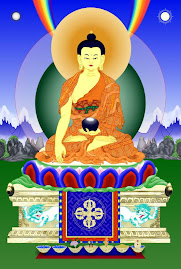
Whenever we see protective symbols such as the Mahakala hanging on the door, or the charms inside people's house, we must cup our palms to show our respect to them. Likewise, we must respect others' sacred shrines. This is an indication that "when there is a will, there is a Buddha." We will experience spiritual response, and be protected. As long as we respect the protective charm, it is not necessary to do a great prostration to it , or make offering to it. The protective charm that we wear must be placed at a clean place if taken out. When we want to wear it again, we use it to touch our forehead. This is to show respect to the god of the protective charm. If we do it everyday, he will protect us. As regards mantra, we can use "Om Mani Padme Hum" (pronounced Om mani bemi hum) or "Amitabha Buddha". If we treat the charm as if there is a god in it, the charm will protect us. If we do not care about the charm, throw it anywhere we like, wear it when it is necessary and casually, the charm will not be effective. We can wear the protective charm to sleep but remember, it will protect us only when we respect it wholeheartedly.

In Tantrayana Buddhism, there is a Dharma known as "Chu Ji-Tuo". In which a person will use his head to touch the Buddha's foot. By paying respect to Buddha this way, one will be protected by the Buddha if he steps on your head. Using protective charm to touch our forehead is also one of the "Chu Ji-Tuo". I hope all of you can understand me now. In short, if we want the protective charm to be effective, we want Buddhas to empower us daily, we must respect the protective charm. This is the right way we should treat our protective charm.

Om Mani Padme Hum

============================================================


History of The Talismans

(Additional info from other source)

This was written by yellow dragon

How Talismans Work

The history of Chinese Taoist talismans stretches back over 5000 years into the mists of time. The symbols that cover the talisman contain the secrets of the Universe.

Although they were conceived thousands of years ago they are based on sound scientific principles of the creative and destructive processes of the

universe and the psychological makeup of the human race. The symbols are pictorial representations, e.g. one stroke equals one heaven; one dot equals one universe.

To explain how Talismans work, we must first explore the theories and concepts behind them:

When the first caveman drew the first stick figure on a cave wall, he was using a symbol. He was using a symbol to represent part of his world. Ever since then, Man has used symbols not only to illustrate concepts, but to manipulate his reality. Because our world is constantly changing, we have used words and names to record what has happened. Every name is a symbol; your name written down symbolises you. Where and when your name is written has an effect on your life and reality.

Everything on Earth is just like a symbol, for example the Tai Chi sign represents the whole Universe; One straight line represents Yang, the male energy of the Universe, and a Broken line represents Yin the female energy of the Universe.

For instance the Pa Qua represents the 8 Directions, different people, parts of your body, elements, seasons, natural phenomenon (like Fire, wind, Earth, Forests, Sun, Moon, lake, thunder, Earth etc.), family relationships etc, it also represents change and non-change.

The talisman uses the whole universal form, transformed into a symbol and changes the way things are.


The Application of Talisman in Feng Shui

Original writer (Chinese Text): Mrs. Jia Yin Smith of San Francisco, California (USA). Translated and edited by Mr. K.C. Goh of Kuala Lumpur, Malaysia.

In ancient times, Talismans or Fu Zhou (magic figures or incantations) were objects for matching up. A bamboo board was typically broken into two pieces which were used for corroboration. Talisman or Fu Zhou originated during the period of the Three Kings and the Five Emperors. The first king was Fu Xi who observed the sky and surveyed the geographical features from the tracks of birds and animals and also invented Ba Gua, using Ba Gua to form the language in the talismans. These ancient talismans reflected how people use Ba Gua to make predictions in those days and these symbols were compiled to form the Book of Change or Yi Jing( I Ching). Talismans were associated with an Emperor by the name of Xuan Yuan or Huang Di.

The mechanism of talismans or Fu Zhou are not based on the material used but on maneuvering the Chi. When writing symbols on the talisman, one is actually matching the Chi of the universe and using the strength of the reflecting stars. When I was in primary school, I had a classmate who suffered from a parotid gland infection named boar head skin disease by the common people. A stamp inscribed with the Chinese character tiger was dipped in blue-black ink and was used to stamp the infected area of the patient. Two weeks later the patient recovered. Isn that incredible? The Tiger character is supposed to be able to eat the boar, metaphorically. The ancient Chinese physicians used talismans to cure sickness. This branch of knowledge is called the discipline of Zhu You section. When writing talismans, one is supposed to chant holy words. These talismans can be consumed by burning the paper and drinking the ashes with water. Alternatively, one can just keep the talismans for protection to bring good fortune and to ward off evil spirits as well as people with evil intentions.

Traditionally, feng shui masters have used talismans to help ward off bad luck or Sha. For example, when a house is directly facing the road, the master would place a stone inscribed with. Tai Shan stone dares to resist (the evil influences) in front of the house. Incidentally, Tai Shan is China most celebrated mountain range and it is believed that the stone from this mountain range has the ability to fend off Sha (noxious vapors) and Kuei (various kinds of demons). Houses that are facing temples and shrines are considered bad because it is believed that evil spirits normally gather outside the temple. Placing a piece of stone inscribed with Yu Qing (literally translation means pure jade which has the ability to fend off evil spirits) is an extension of the application of talisman.

The Yang Chai Ten Book states to renovate a house and to relocate a door if one does not have resources, this could not be done. Even if one has resources, one still needs to select an auspicious day and time. If the omen of the house is bad and one could not wait for the appropriate day and time, one can use talismans to protect the house for peace and security. In terms of function, there are two kinds of talisman: The first one is direction talisman and the other one is time talisman. Examples of direction talisman are: (1) stone dares to resist (the evil influences), (2) mountain and water protection, (3) tai ji symbol, (4) ba gua talisman and (5) wording talisman. These talismans are normally placed in inauspicious locations of the house, for instance the main door or walkway or bridge leading to the main door, the corner of the house, the position directly facing the roof-top and places in front or at the back of the house which are considered to have bad feng shui.

When performing renovation on a day that happens to be inauspicious according to the Chinese almanac, then time talisman could be used. Feng shui masters can use holy words and symbols to write talisman to change the bad omen into good luck.

Using talisman in feng shui, removes the psychological barrier and deals with the taboos of the culture. With the application of talisman, the feng shui master can stay away from an awkward predicament where there are no other feng shui cures.

Note: There were many versions concerning the name of the three Kings. Some regarded Fu Xi, Zhu Rong, and Shen Nong as the three Kings. Some textbook mentioned Sui Ren, Fu Xi, and Shen Nong. Some people considered Fu Xi, Nu Wa, and Shen Nong.

The five emperors refer to Huang Di, ZhuanXu, Di Ku,Di Yao,Di Shun. Huang Di was born 5000 year ago during the New Stone Age. His family name is Gongsun and he is being called Xuan Yuan.